


When I first read the Resonant Computing Manifesto a few months ago, it reminded me of how I felt technology worked back in 2008. The technology in my life was fragmented in a way that helped me slow down and focus on them exactly when I needed them. If I wanted to go somewhere new on my bike, my Internet-enabled laptop would let me search for directions, which I could store then store in my brain. If I wanted to feel informed about the world around me, I would start my mornings by consulting primary and secondary sources that I trusted both in the physical world and online: RSS feeds made the latter seamless. If I was driving and the directions were more complicated, I could take the Garmin Nuvi out of my glove compartment and enter the directions, and roll down my window to talk to someone if there was a discrepancy. If I wanted to invite friends over, I could call from my landline, and from my laptop, I could email or instant message them. And I always felt like technology was available to me because if I was on the go, my portable electronics devices consisted of a flip phone and an iPod: the one with the giant wheel. In addition to music, the iPod let me listen to recordings of talks, notes, and other information that I found useful.
Over the next decade, I felt a descent from the upright, prosocial world I had once occupied to the hunched down world of the smartphone. Unlike the iPod, the iPhone brought all these technologies onto the same surface, each competing for my attention with notifications that took me away from my surroundings and the people in my life. When all technology existed on a single surface, competing for a user’s attention, software was designed to be habit-forming, resulting in technologies that conflated utility and vice.
Building a Smarter Home

It started with a lock or a light switch in 2016, and within a few months, I could turn off the lights, lock the doors, change the colors of the lights, operate the speakers all from my phone, and I could even talk to the speakers. The home, like the phone, was now smart. I still couldn’t find my keys half the time, but if I forgot to turn off the light…
As I’ve built a smarter home, it’s brought back the hope that I can fragment technology in a way that allows it to be useful without being intrusive. I thought back to that iPod. In particular, I wanted to explore what I could do with a simple interface, and the advances in microcontrollers have made it easy to test this out.
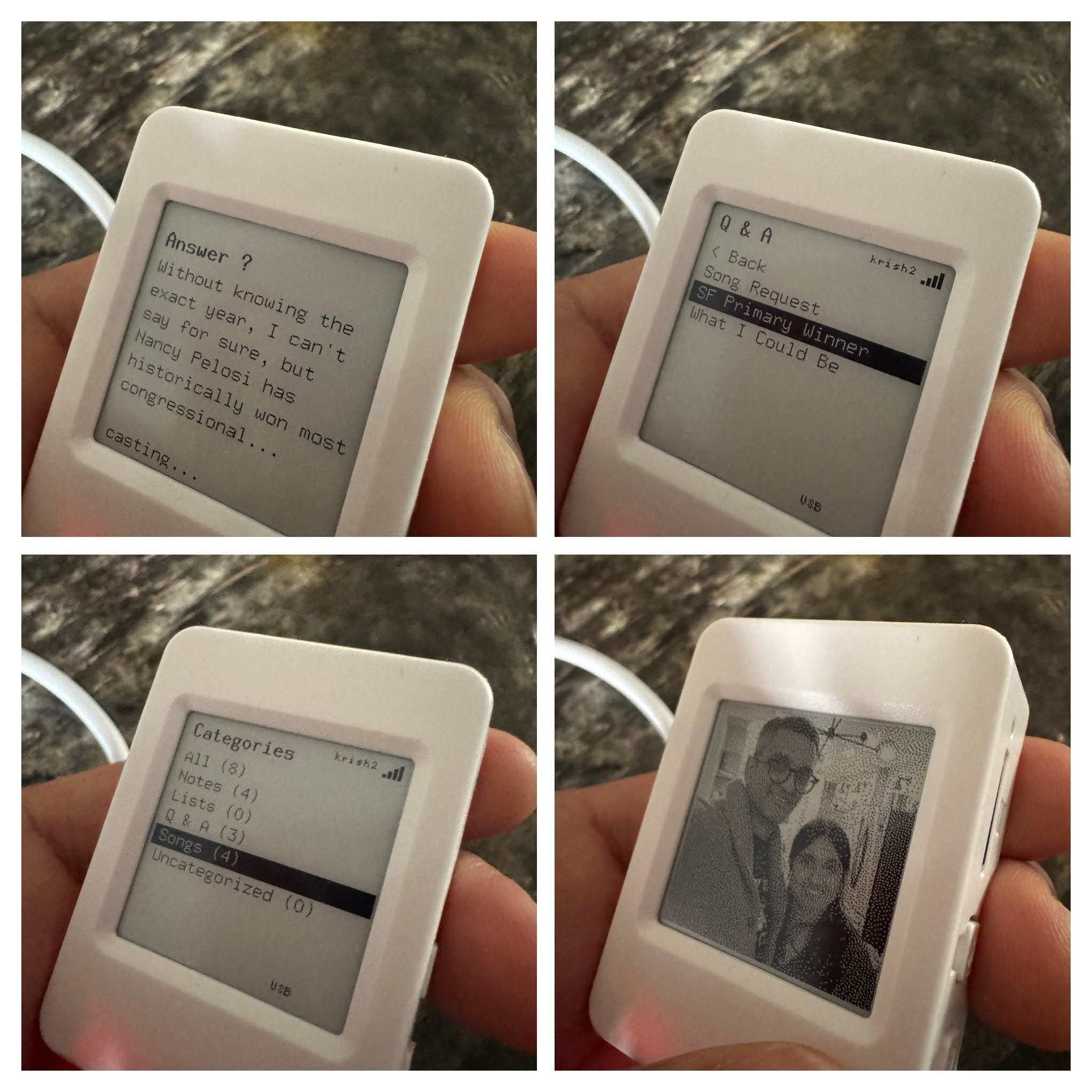
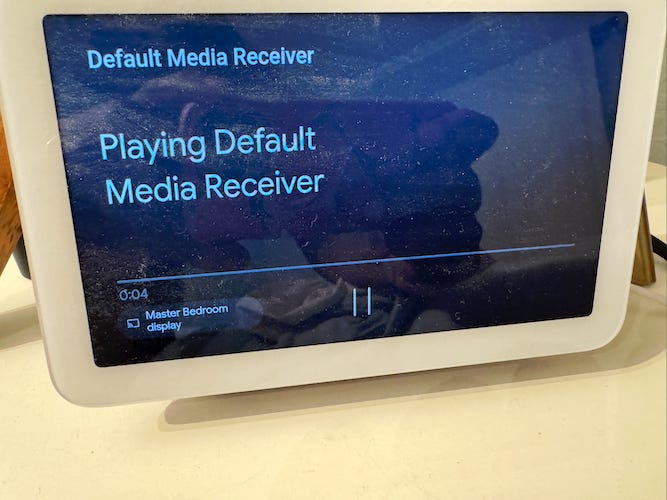
While researching microcontrollers, my father recommended I look at the ESP32-S3, which supports Bluetooth and WiFi out of the box, and I found a development board from Waveshare with an e-Paper display and audio codec for only $16; it also had a single button, which harkened back to the simplicity of the iPod interface. Rust ended up being a great language for the software stack, and now, with just a single button, I have a system that can record and take notes, provide answers to questions, and listen to those answers or recordings on any Cast-enabled device around the home. [Edit: It also controls all our lights.]
The advent of open weight models like Gemma 4 means that solutions like this can run entirely from within one’s home, without paying a subscription fee or creating the environmental impact of depending on a large Cloud model. It makes me bullish about a return to a resonant computing future.
It was fascinating to hear about the device you built, and I found the resonant computing manifesto to be inspiring.
I won't confirm or deny that I am receiving emoluments or perquisites for making this post.